Why Automate Repetitive Employee Training?
Automating repetitive training with AI and an LMS saves time, cuts costs, and boosts employee engagement. Learn how to implement the system and avoid common mistakes.
6 min read
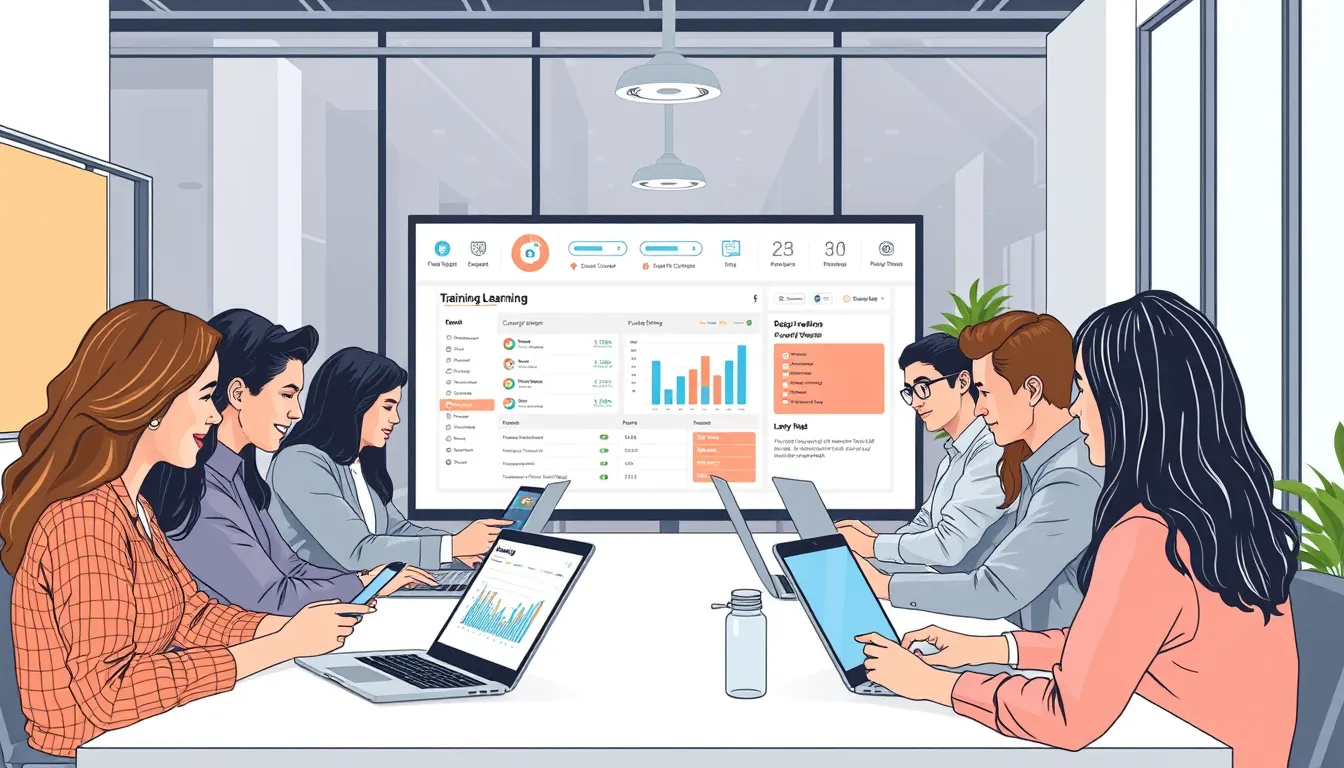
Automating repetitive employee training with AI and an LMS platform is a smart way to cut costs, save HR time, and boost engagement. These systems let you create courses in minutes, schedule training automatically, and track progress in real time. This is especially useful for companies that run monthly or quarterly training—such as safety protocols, service standards, or new product updates.
By 2026, 20% of EU businesses with 10+ employees will use AI, and corporate training is one of its key applications. Automation doesn’t just reduce manual work—it makes learning more flexible and personalized. For example, AI can adapt content to an employee’s skill level or translate courses into multiple languages in minutes.
Who benefits most? HR directors, L&D leaders, and business owners looking to streamline training and reduce operational costs. Automation is also ideal for companies with high turnover, where new hires need fast, consistent onboarding.
Why Repetitive Training Matters in Your Company
Repetitive training involves regular sessions to refresh and update employee knowledge. For example, restaurant staff might retrain on service standards every quarter, while healthcare workers regularly update safety protocols. These sessions are essential to:
- Meet legal requirements (e.g., workplace safety).
- Maintain high service and performance standards.
- Introduce new products or processes.
- Reduce errors that could lead to financial or reputational losses.
Without automation, these sessions drain HR and employee time. Preparing and running a single training for 100 people can take days. With an LMS system and AI, the process shrinks to hours, and results become more predictable.
How Automation Saves Time and Money
Automating repetitive training solves three key challenges:
- Faster preparation. AI generates courses from company documents in minutes. For example, a safety manual can become an interactive course with quizzes and games.
- Lower costs. No need to hire trainers or book venues. Online courses are available anytime, cutting logistics expenses.
- Consistent training. All employees receive the same information, which is critical for companies with multiple locations.
According to Eurostat, in 2020, 67.4% of EU businesses provided continuous vocational training. Automation makes this process more efficient and accessible, even for small businesses.
How AI Simplifies Course Creation and Adaptation
AI in an LMS performs several key functions:
- Course generation. Upload a document (e.g., a manual or presentation), and AI creates an interactive course with questions, examples, and tests.
- Personalized learning. AI analyzes test results and adjusts content to match an employee’s knowledge level. For example, if someone excels in a topic, they’ll get more challenging tasks.
- Automatic translation. Courses can be translated into 25+ languages in minutes—ideal for global teams.
- Voiceovers. AI can narrate courses, making them more accessible for different learning styles.
For a 200-person company, AI can create a course on new service standards in an hour, translate it into three languages, and assign it to employees worldwide. Without automation, this would take days.
Content Formats for Repetitive Training
An LMS supports nine content formats for regular training:
- Courses – Structured lessons with theory and practice.
- Presentations – For visual information delivery.
- Workbooks – To reinforce knowledge with exercises.
- Long-form content – For in-depth topic exploration.
- Quizzes – To test knowledge in a fun, engaging way.
- Interactive games – To boost employee engagement.
- Microlearning – Short, 5–10 minute lessons that fit into a workday.
- Video lessons – For clear, visual explanations of processes.
- Checklists – For quick knowledge checks before tasks.
Variety keeps training engaging and effective. Microlearning works well for quick updates, while interactive games increase participation.
How to Implement Automated Repetitive Training: A Step-by-Step Guide
Rolling out an LMS and AI for training requires planning. Here’s a checklist:
- Define goals. What do you want to achieve? For example, cut training time by 50% or reduce costs by 30%.
- Choose an LMS. Look for AI support, content formats (SCORM, xAPI), HR integrations, and analytics. Kelbado offers all these features.
- Prepare content. Gather documents for course creation (manuals, presentations, videos).
- Create your first course. Use AI to generate a course from your materials.
- Assign training. Set deadlines and schedules for recurring sessions.
- Test the system. Run a pilot with a small group and gather feedback.
- Scale up. Deploy the system company-wide and set up automated reports.
Don’t skip testing—it helps identify and fix issues before full implementation.
Common Mistakes When Automating Repetitive Training
Automation may not deliver expected results if you make these mistakes:
- No clear goals. Without defined objectives, it’s hard to measure success.
- Ignoring feedback. Employees may resist new tools if they’re not involved in the process.
- Content overload. Too many courses or complex tasks can reduce motivation.
- Lack of support. Employees need help learning the new system, especially early on.
- No analytics. Without progress tracking, it’s difficult to gauge training effectiveness.
To avoid these pitfalls, start small. Automate training for one department or type, gather feedback, and scale gradually.
How to Choose an LMS for Training Automation
When selecting an LMS for repetitive training, consider these criteria:
| Criterion | Why It Matters |
|---|---|
| AI support | Lets you generate courses from documents and tailor learning to each employee. |
| Content formats | More formats mean more engaging training options. |
| SCORM/xAPI export | Ensures compatibility with other systems and easy course transfers. |
| Automatic translation | Essential for global teams. |
| Analytics & reports | Tracks employee progress and training effectiveness. |
| Integrations | Simplifies syncing with HR systems and other tools. |
| GDPR compliance | Mandatory for EU-based companies. |
Kelbado meets all these criteria and offers flexible plans for businesses of all sizes.
FAQ
What is repetitive employee training?
Repetitive employee training refers to regular sessions designed to maintain and update staff knowledge, such as safety protocols, service standards, or new product training.
What problems does automating repetitive training solve?
Automation reduces the time spent preparing and conducting training, lowers costs, ensures consistent learning experiences, and allows real-time progress tracking for employees.
How does AI help automate training?
AI generates courses from internal documents, tailors content to each employee’s knowledge level, analyzes results, and provides personalized recommendations for improvement.
What content formats does an LMS support for repetitive training?
An LMS supports courses, presentations, workbooks, quizzes, interactive games, long-form content, microlearning, video lessons, and checklists—making training engaging and varied.
How do I choose an LMS for automating training?
Select an LMS with AI support, SCORM/xAPI compatibility, automated course translation, analytics, and HR system integrations. Kelbado offers all these features.
How much does it cost to automate training with AI and an LMS?
Costs depend on the number of employees and platform features. Basic plans for small businesses start at a few hundred euros per month. Learn more about pricing here.
Conclusion
- Automating repetitive training with AI and an LMS system saves time and money while making sessions more flexible and effective.
- AI simplifies course creation, adapts content to employee skill levels, and translates courses into multiple languages.
- An LMS supports diverse content formats, increasing employee engagement.
- Successful implementation requires clear planning and system testing before scaling.
- Choose an LMS with AI, SCORM/xAPI, analytics, and integrations to streamline training.
Ready to optimize repetitive training in your company? Try Kelbado. The platform lets you create courses in minutes, automate assignments, and track employee progress in real time.