LMS vs LEP: Key Differences and How to Choose
LMS and LEP serve distinct roles in corporate training: the first manages courses and reporting, while the latter boosts engagement through personalization. Discover the key differences and how to pick the right platform for your business.
6 min read
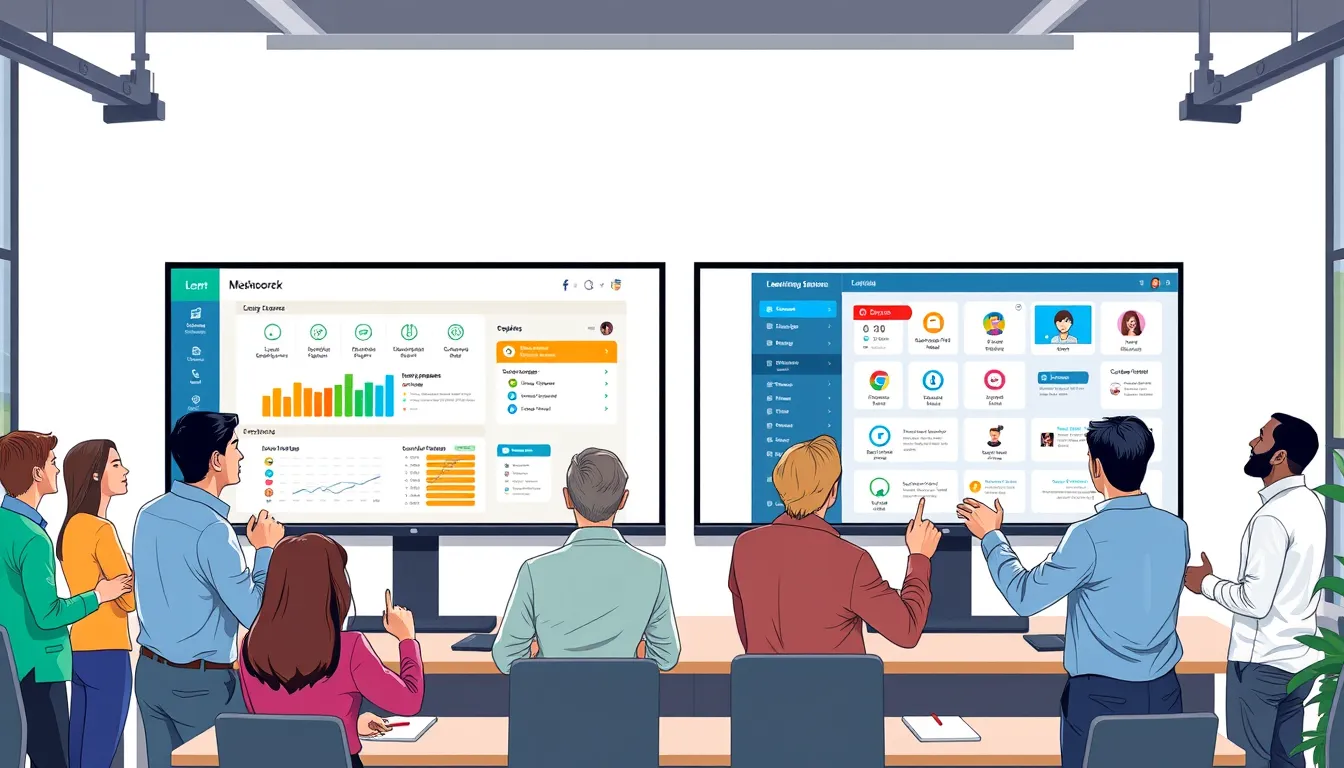
LMS and LEP aren’t interchangeable—they serve different purposes in corporate training. An LMS (Learning Management System) manages courses, reporting, and compliance, while an LEP (Learning Experience Platform) focuses on personalization, engagement, and adapting learning to employee needs. The right choice depends on your training goals and business scale: LMS for structured programs, LEP for flexible, motivating learning with AI support.
Why does this matter? In 2026, EU companies increasingly face low employee engagement in training. Eurostat data shows that in 2022, 87% of informal learning activities were employer-sponsored, yet their effectiveness often falls short. LMS and LEP address this differently: the first ensures control and reporting, while the second drives motivation and adaptability.
This article is for HR directors, L&D leaders, and business owners who want to determine which platform best fits their needs. We’ll explore the key differences, pros and cons of each, and when to choose one—or combine both.
What Is an LMS and What Does It Do?
An LMS (Learning Management System) is a platform for managing corporate training. It allows you to create, assign, and track courses while generating reports on completion and compliance. Core LMS features include:
- Course creation and assignment: Upload ready-made materials or generate new ones with AI, like in Kelbado.
- Progress tracking: Monitor course completion, assess knowledge, and generate reports.
- Compliance and certification: Ensure training meets legal requirements (e.g., GDPR or AI Act).
- Standard integration: Support for SCORM, xAPI, and cmi5 for compatibility with other systems.
An LMS is ideal for companies that need structured training with clear deadlines and reporting. For example, manufacturing or healthcare organizations use LMS platforms to train employees on safety protocols or compliance standards.
What Is an LEP and How Does It Differ from an LMS?
An LEP (Learning Experience Platform) focuses on personalizing learning and engaging employees. Unlike an LMS, which manages courses, an LEP adapts training to individual needs. Key LEP features include:
- Personalized learning: AI analyzes employee behavior and recommends relevant materials.
- Social learning: Employees share knowledge, comment on courses, and participate in discussions.
- Gamification: Points, badges, and leaderboards boost motivation.
- Adaptive learning paths: Content dynamically adjusts based on progress and interests.
An LEP works best for companies where training isn’t just about completion but also about motivating employees to apply knowledge. For example, IT firms or creative agencies use LEPs to develop communication skills or project management through informal, engaging learning.
Key Differences Between LMS and LEP: A Comparison Table
| Criteria | LMS | LEP |
|---|---|---|
| Primary Purpose | Course management and reporting | Personalization and engagement |
| Focus | Structured learning | Flexible, adaptive learning |
| Target Audience | All employees | Employees needing motivation |
| Tools | Courses, quizzes, reports, compliance | AI recommendations, social features, gamification |
| Integrations | SCORM, xAPI, cmi5, HRIS | API, social networks, collaboration tools |
| Standard Support | Yes (SCORM, xAPI, cmi5) | Not always |
| Use Cases | Safety training, compliance, certification | Soft skills, creative skills |
When to Choose an LMS for Corporate Training
An LMS is the best choice for companies that prioritize:
- Structured training: If your program includes mandatory courses with deadlines and reporting (e.g., safety training or GDPR compliance).
- Compliance and certification: Track course completion and generate audit reports.
- Standard integration: SCORM, xAPI, and cmi5 support ensure compatibility with other systems and course portability.
- Scalability: An LMS scales easily for businesses of any size, from small teams to large enterprises.
Example: A 500-employee manufacturing company uses an LMS for regular safety and quality training. The platform assigns courses, tracks completion, and generates reports for regulatory bodies.
When to Choose an LEP for Corporate Training
An LEP is ideal for companies that want to:
- Boost employee engagement: If employees complete courses but don’t apply knowledge, an LEP motivates them through gamification and social features.
- Adapt training to needs: AI recommends relevant materials, especially useful for soft skills development.
- Foster a learning culture: LEPs support informal learning through knowledge sharing and discussions.
- Integrate learning into workflows: Employees learn on the go via mobile apps or corporate messengers.
Example: An IT company uses an LEP to develop communication and project management skills. Employees receive personalized recommendations, join discussions, and compete in gamified challenges.
Can You Combine LMS and LEP?
Yes, many companies use a hybrid approach, leveraging the strengths of both platforms. For example:
- LMS for mandatory training: Safety, compliance, certification.
- LEP for skill development: Soft skills, creative tasks, informal learning.
Integrating LMS and LEP creates a unified learning ecosystem where employees receive structured courses while staying motivated to grow. For instance, Kelbado supports both approaches: it generates AI-powered courses (like an LMS) and adapts them to employee needs (like an LEP).
How to Choose Between LMS and LEP: A Step-by-Step Checklist
Define your training goals:
- Do you need reporting and compliance? → LMS.
- Do you want to boost engagement and motivation? → LEP.
Analyze your audience:
- All employees or a specific group? → LMS works for mass training.
- Do you need personalization? → LEP is better for individual learning.
Assess budget and resources:
- LMS is often cheaper and easier to implement.
- LEP requires more investment in AI and gamification.
Check integrations:
- Do you need SCORM or xAPI support? → LMS.
- Is social network integration important? → LEP.
Run a pilot project:
- Test both platforms with a small group of employees.
- Compare engagement, completion rates, and feedback.
Make a decision:
- If structure and reporting matter most → LMS.
- If motivation and adaptability are key → LEP.
- If both are important → Hybrid solution.
Common Mistakes When Choosing Between LMS and LEP
Using an LEP for compliance: LEPs may not support SCORM or xAPI, which can cause reporting issues for regulatory bodies.
Ignoring engagement in an LMS: If employees aren’t motivated to complete courses, even the most feature-rich LMS won’t deliver results.
Overestimating AI in LEPs: Not all LEPs adapt learning effectively. Test the platform before committing.
Ignoring business scale: An LEP may be overkill for small businesses, while an LMS might lack flexibility for large corporations with diverse needs.
Skipping a pilot project: Without testing, it’s hard to know which platform fits your company best.
FAQ
What is an LMS?
An LMS (Learning Management System) is a platform for managing corporate training: creating, assigning, and tracking courses, as well as generating reports on completion and compliance.
What is an LEP?
An LEP (Learning Experience Platform) focuses on personalizing learning, engaging employees, and adapting content to their needs using AI and social tools.
Can you use an LEP without an LMS?
Theoretically, yes, but in practice, LEPs are often integrated with LMS platforms to combine course management with a personalized learning experience.
Which platform is better for small businesses?
For small businesses with limited resources, an LMS is often the more practical choice, as it covers essential training and reporting needs.
Do LEPs support SCORM and xAPI standards?
Not all LEPs support SCORM or xAPI, as their primary focus is on personalization and engagement rather than content standardization.
How do you know when to switch from an LMS to an LEP?
If employees complete courses but fail to apply knowledge, or if training isn’t adapting to their needs, it may be time to consider an LEP or a hybrid solution.
Conclusion
- LMS and LEP serve different purposes: The first manages courses and reporting, while the second engages employees through personalization.
- LMS works for structured training: Safety, compliance, certification.
- LEP excels at flexible, motivating learning: Soft skills, creative tasks.
- A hybrid approach combines both strengths: LMS for mandatory training, LEP for skill development.
- Your choice depends on goals and audience: Decide whether control or motivation matters most, and test the platform before committing.
If you’re still unsure which platform fits your business, try Kelbado. Our platform combines LMS and LEP features: it generates AI-powered courses, supports SCORM and xAPI, and adapts training to employee needs.