What Every Employee Needs to Know About GDPR
GDPR training for employees is a mandatory requirement for companies in the EU. Learn which topics to include in your program, how to deliver training effectively, and how to automate the process with AI.
7 min read
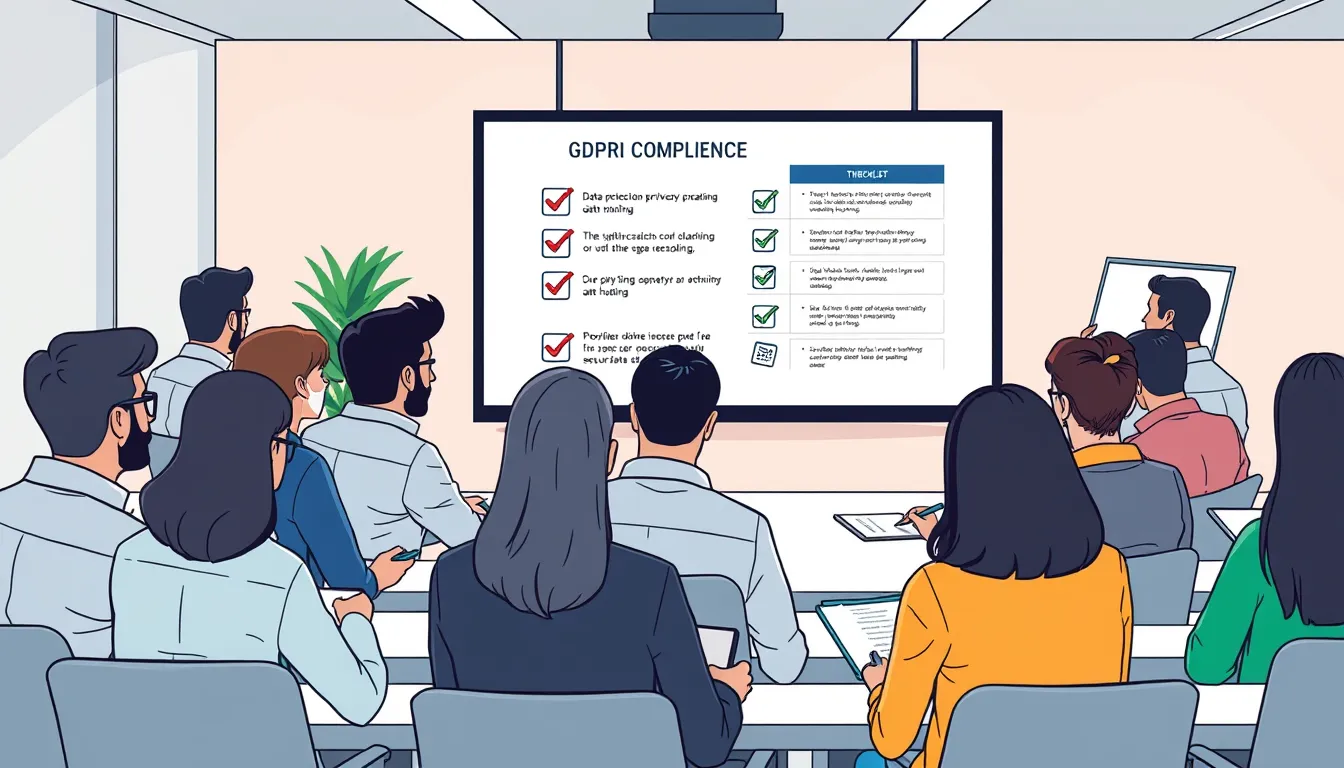
GDPR training for employees is a legal requirement for companies in the European Union. Every employee must understand the basics of data protection, data subject rights, their own responsibilities, and how to handle personal information securely. This isn’t just a compliance obligation—it’s a way to reduce the risk of data breaches and avoid hefty fines. Under Article 46(1) of Directive (EU) 2015/849, companies must run continuous training programs so staff can spot risks and follow data protection rules.
Who needs to pay attention? Primarily HR directors, L&D leaders, and business owners responsible for compliance. If employees aren’t properly trained, GDPR violations can lead to fines of up to 4% of a company’s annual turnover or €20 million. Beyond avoiding penalties, effective training builds a culture of data protection and strengthens customer trust.
What is GDPR and why does it matter for employees?
GDPR (General Data Protection Regulation) is the EU’s data protection law, in force since 2018. It governs how personal data of EU citizens is processed and applies to all companies handling such data, regardless of location. For employees, GDPR isn’t just a set of rules—it’s a practical guide for day-to-day work.
Employees should understand:
- What counts as personal data (name, address, email, IP address, etc.).
- The rights of data subjects (access, correction, erasure, restriction of processing).
- The company’s and employees’ responsibilities when handling data.
- Security measures to prevent data leaks.
For example, if an employee sends an email containing a client’s personal data, they must ensure it’s encrypted or sent via a secure channel. Failing to do so could lead to a data breach and serious consequences for the company.
Key topics to include in a GDPR training program
A GDPR training program should be comprehensive, covering all critical aspects of data protection. Here’s what to include:
- GDPR basics: What it is, its goals, and scope.
- Personal data: Definition, examples, and categories (standard and special).
- Data subject rights: Right to access, correct, erase (“right to be forgotten”), restrict processing, and data portability.
- Employee responsibilities: How to handle data, security measures, and responding to data subject requests.
- Data processing procedures: Collecting, storing, transferring, and deleting data.
- Security measures: Encryption, access control, and data leak prevention.
- Responding to data breaches: How to detect breaches, who to notify, and how to minimise damage.
- Consequences of non-compliance: Fines, disciplinary actions, and legal repercussions.
For companies operating across the EU, it’s important to account for national variations. For instance, Germany has additional data protection requirements, while France imposes stricter rules for healthcare data.
How to organise GDPR training: a step-by-step guide
Organising GDPR training requires a structured approach. Follow this step-by-step plan to ensure effectiveness:
- Identify your audience: Decide who needs training (all employees or only those handling data).
- Choose a training format: In-person workshops, online courses, webinars, or blended learning.
- Develop the program: Include all key topics and tailor the content to your company’s needs.
- Create training materials: Presentations, videos, interactive courses, and quizzes.
- Assign responsibilities: Designate who will deliver the training and monitor progress.
- Deliver the training: Schedule sessions and provide access to materials.
- Assess knowledge: Use tests or practical tasks to evaluate understanding.
- Gather feedback: Ask employees what worked and what could be improved.
- Document results: Record who completed the training and their performance.
- Schedule refresher training: Update materials regularly and repeat sessions as needed.
GDPR training checklist:
- Audience identified.
- Training format selected.
- Program developed.
- Training materials created.
- Responsibilities assigned.
- Training sessions delivered.
- Knowledge assessed.
- Feedback collected.
- Results documented.
- Refresher training scheduled.
How to automate GDPR training with AI
Automating GDPR training with AI saves time and resources while ensuring materials stay up to date. Here’s how to do it with the Kelbado platform:
- Generate courses from documents: Upload company policies, guidelines, and regulations into Kelbado, and AI will create an interactive course automatically.
- Interactive formats: Use slides, games, quizzes, and workbooks to engage employees.
- Automatic updates: AI tracks legal changes and updates courses without manual input.
- Personalised learning: The platform adapts content to each employee’s knowledge level, improving effectiveness.
- Repeated training: Set up automatic reminders for key topics at regular intervals.
- Analytics and reporting: Track employee progress, identify knowledge gaps, and adjust the program as needed.
For example, a company with 200 employees can create a single GDPR course that updates automatically when laws change. Employees can complete training at their own pace, while HR receives reports on progress and quiz results.
Common mistakes in GDPR training
Even with a solid program, companies often make mistakes that reduce training effectiveness. Here are the most common pitfalls:
- Going through the motions: Training is treated as a box-ticking exercise without engaging employees. As a result, knowledge isn’t retained, and employees don’t apply what they’ve learned.
- One-size-fits-all approach: The program doesn’t account for the company’s specific needs or employees’ roles. For example, accountants and marketers need different data protection knowledge.
- Infrequent training: Training is only provided once, during onboarding, and never repeated. Since forgetting is natural, refresher training is essential.
- Superficial assessments: Testing is too basic, without practical tasks. Employees may guess answers without truly understanding the material.
- No feedback loop: Employees can’t ask questions or share input on the training. This reduces engagement and effectiveness.
- Ignoring legal updates: The training program isn’t updated when GDPR or national laws change, leaving employees with outdated information.
- Lack of motivation: Employees don’t see the value in training. It’s important to explain how GDPR impacts their work and why it matters for the company.
How to assess employees’ GDPR knowledge
Assessing knowledge is a critical part of GDPR training. It ensures employees have absorbed the material and can apply it in practice. Here are some effective methods:
- Quizzes and tests: Create questions on key topics, such as “What counts as personal data?” or “What should you do in case of a data breach?”
- Practical tasks: Present real-world scenarios, like “How would you handle a data subject’s request to delete their information?”
- Role-playing: Run training sessions where employees practice responding to different situations, such as a request for data access.
- Process audits: Observe how employees handle data in their daily work, such as storing documents with personal data or responding to client requests.
- Customer feedback: Collect client feedback on how employees handle their data to identify knowledge gaps.
Example GDPR quiz:
- What is GDPR? a) A US data protection law. b) The EU’s General Data Protection Regulation. c) A security standard for IT companies.
- Which data is considered personal? a) Only first and last names. b) Any information relating to an identified or identifiable individual. c) Only financial data.
- What should you do in case of a data breach? a) Do nothing if the breach is minor. b) Report the breach to the supervisory authority within 72 hours. c) Only report the breach if the client asks you to.
FAQ
Why is GDPR training for employees mandatory?
GDPR training is mandatory because EU companies must ensure employees understand data protection requirements. This obligation is set out in Article 46(1) of Directive (EU) 2015/849, which requires ongoing training programs to help staff recognise risks and comply with data protection rules.
What topics should be included in a GDPR training program?
A GDPR training program should cover GDPR basics, data subject rights, employee responsibilities, data processing procedures, security measures, and steps to take in the event of a data breach.
How often should GDPR training be conducted?
GDPR training should be conducted regularly, especially when laws or company processes change. It’s recommended to provide training at least once a year to ensure employees stay up to date.
Can GDPR training be automated using AI?
Yes, AI platforms like Kelbado can automate course creation, knowledge checks, and refresher training, saving time and resources while ensuring consistency.
How can you assess employees’ GDPR knowledge?
Employee knowledge can be assessed through quizzes, practical tasks, and LMS-based tests. Training reports help track progress and identify gaps in understanding.
How much does GDPR training for employees cost?
Costs vary depending on the approach—off-the-shelf courses, external workshops, or AI-powered solutions. AI-driven platforms often provide a more cost-effective and scalable option.
Conclusion
- GDPR training for employees is a legal requirement for EU companies, helping to minimise the risk of data breaches and fines.
- A training program should cover GDPR basics, data subject rights, employee responsibilities, and security measures.
- Organising training requires a structured approach, from identifying the audience to assessing knowledge and documenting results.
- Automating training with AI saves time and resources while ensuring materials stay up to date.
- Common training mistakes include a tick-box approach, lack of customisation, and infrequent updates.
To automate GDPR training and make it as effective as possible, try Kelbado. The platform lets you create interactive courses, assess employee knowledge, and generate training reports—all in one place.