How to Reduce Employee Onboarding Time with LMS and AI
Discover how LMS and AI can cut employee onboarding time by 40–60%, automate processes, and boost engagement for new hires.
8 min read
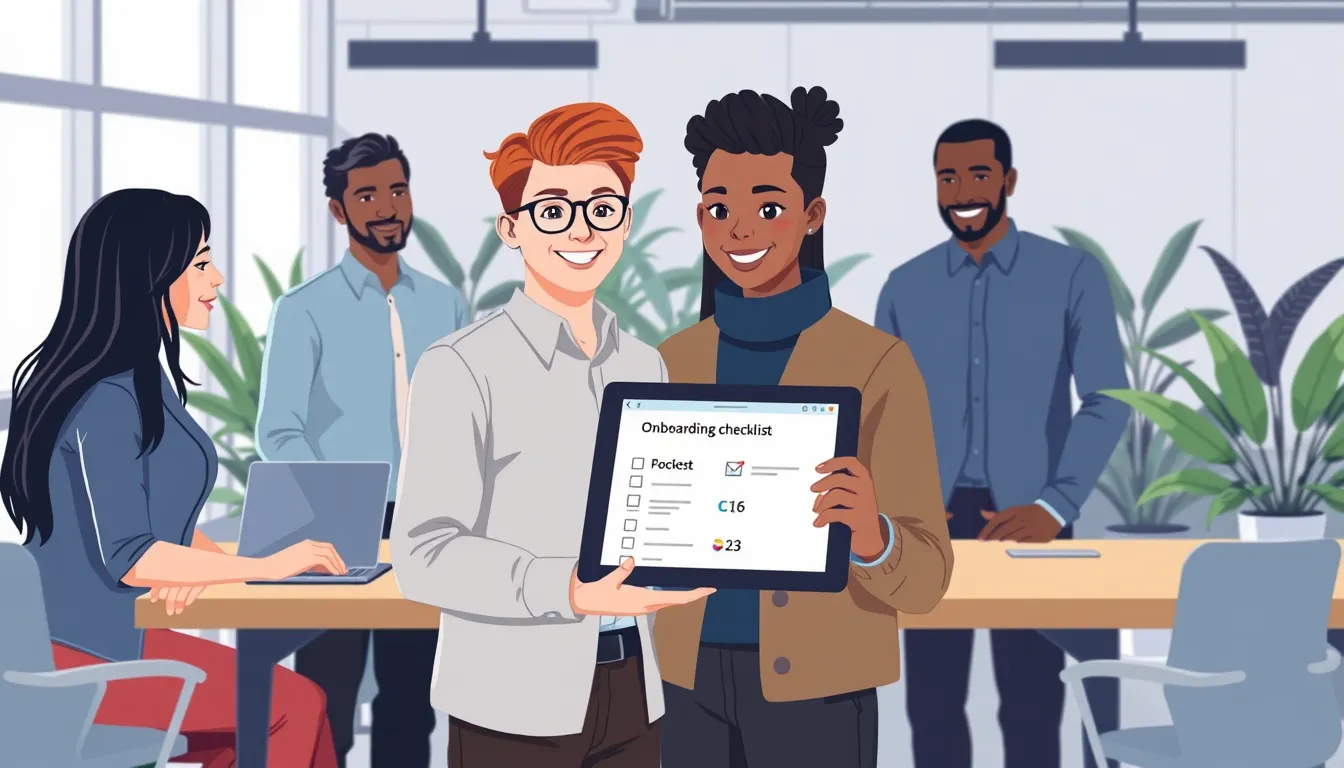
Employee onboarding can be reduced by 40–60% using an LMS and AI, automating training, standardizing processes, and personalizing content. This helps new hires adapt faster, reduces HR workload, and boosts engagement. It’s especially valuable for companies with high turnover or remote teams, where traditional onboarding methods demand significant time and resources.
For HR directors and L&D leaders, this is an opportunity to optimize budgets, improve onboarding quality, and lower the risk of early employee turnover. In this article, we’ll explore how to implement LMS and AI to speed up onboarding, which tools to use, and which mistakes to avoid.
Why Traditional Onboarding Falls Short
Traditional onboarding often relies on manual processes: HR conducts in-person meetings, distributes printed materials, and managers spend time explaining tasks. This leads to several issues:
- Lengthy adaptation: On average, it takes employees 3–6 months to fully settle into their roles, delaying productivity.
- Lack of standardization: Each HR manager or team lead conducts onboarding differently, resulting in inconsistent quality.
- Information overload: New hires receive too much data in a short time, reducing retention.
- Low engagement: Passive learning (lectures, manuals) doesn’t motivate employees or foster company loyalty.
LMS and AI solve these problems by automating routine tasks and making training interactive and personalized.
How an LMS Accelerates Onboarding: 5 Key Features
An LMS (Learning Management System) is a platform for creating, managing, and tracking corporate training. For onboarding, it offers the following capabilities:
Automated training: Employees gain instant access to courses and materials after hiring, eliminating wait times for HR or managers. For example, in a 200-person company, this reduces training setup time from 2 weeks to 1 day.
Standardized processes: All new hires follow the same onboarding program, ensuring consistent training quality. This is critical for multinational companies with offices in different countries.
Progress tracking: The LMS shows which courses an employee has completed, which tasks they’ve finished, and where they struggled. This allows HR to adjust the program in real time.
Interactive formats: Videos, quizzes, games, and simulations make learning engaging and improve knowledge retention. For instance, an interactive quiz on company culture helps employees remember values better than a text document.
Integration with other systems: The LMS syncs with HRM, CRM, and corporate portals, simplifying data access and reporting. For example, after completing onboarding, employees automatically gain access to the tools and documents they need.
The Role of AI in Speeding Up Onboarding
Artificial intelligence adds flexibility and personalization to LMS capabilities. Here’s how AI helps reduce onboarding time:
Course generation from documents: AI creates training materials from internal company documents (regulations, manuals, presentations) in minutes. For example, if a company has a 50-page safety manual, AI can turn it into an interactive course with tests and examples.
Adaptive learning: AI analyzes a new hire’s knowledge and adjusts course difficulty. If an employee masters material quickly, the system offers more challenging tasks—and vice versa.
Automated translation: For global companies, AI translates courses into required languages while preserving meaning and style. This speeds up onboarding for international teams and reduces localization costs.
AI tutor: A virtual assistant answers employee questions 24/7, explains complex topics, and provides learning recommendations. For example, if an employee struggles with the company CRM, the AI tutor can offer a step-by-step guide or video tutorial.
Analytics and program improvement: AI analyzes onboarding data to identify weak points. For instance, if 70% of employees fail a corporate culture test, the system suggests revising that section.
Step-by-Step Plan: Implementing LMS and AI for Onboarding
Adopting LMS and AI requires preparation, but the results justify the effort. Follow this plan to reduce onboarding time and improve effectiveness:
Step 1: Define Goals and KPIs
Before implementing an LMS, clarify what you want to achieve. For example:
- Reduce onboarding time from 3 months to 1.
- Increase employee engagement by 30%.
- Cut errors in the first 2 weeks by 50%.
Set KPIs to measure success: adaptation time, test results, employee feedback, and retention rates.
Step 2: Choose an AI-Powered LMS
When selecting an LMS, look for these features:
- Course generation from documents.
- Personalized learning paths.
- Interactive formats (quizzes, games, simulations).
- AI tutor and chatbots.
- Automated course translation.
- Analytics and reporting.
- Integration with HRM and other systems.
Platforms like Kelbado offer all these capabilities and comply with GDPR and EU AI Act requirements, which is important for companies in the EU.
Step 3: Structure Your Onboarding
Break the adaptation process into stages and define the materials needed for each. For example:
- Day 1: Company introduction (CEO video, corporate culture presentation, office tour or virtual walkthrough).
- Week 1: Product/service training, team introductions, tool tutorials.
- Month 1: In-depth role-specific training, mentor meetings, knowledge checks.
Create courses, tests, and interactive tasks in the LMS for each stage.
Step 4: Automate with AI
Use AI to speed up content creation and adaptation:
- Upload internal documents (regulations, manuals, presentations) to the LMS and generate courses from them.
- Set up an AI tutor to answer employee questions.
- Translate courses into required languages using AI.
- Adjust course difficulty based on each employee’s skill level.
Step 5: Engage Leadership and Mentors
Onboarding isn’t just HR’s responsibility. Leaders and mentors should be involved:
- Record video messages from department heads.
- Assign mentors to guide new hires in their first weeks.
- Include meetings with key employees in the onboarding program.
Step 6: Run a Pilot Project
Test the onboarding program with a small group of employees. Gather feedback and make adjustments. For example, if employees find tests too difficult, simplify them or add more explanations.
Step 7: Scale and Improve
After a successful pilot, roll out the program to all new hires. Regularly analyze data and refine onboarding:
- Track KPIs and adjust the program as needed.
- Update courses to reflect company changes.
- Collect feedback from employees and HR.
Checklist: How to Run Onboarding with LMS and AI
Use this checklist to ensure nothing is overlooked when implementing onboarding with LMS and AI:
- Defined onboarding goals and KPIs.
- Selected an AI-powered LMS with required features.
- Created an onboarding structure (stages, materials, tasks).
- Uploaded internal documents to the LMS and generated courses using AI.
- Set up an AI tutor to answer employee questions.
- Translated courses into required languages (if needed).
- Adjusted course difficulty based on employee skill levels.
- Involved leadership and mentors in the onboarding process.
- Launched a pilot project and gathered feedback.
- Scaled the program to all new hires.
- Set up analytics and regularly improve onboarding.
Common Onboarding Mistakes and How to Avoid Them
Even with LMS and AI, mistakes can undermine your efforts. Here are the most common pitfalls and how to avoid them:
Mistake 1: Lack of Structure
Problem: Onboarding becomes a chaotic mix of meetings and materials, confusing employees. Solution: Develop a clear onboarding program with stages, deadlines, and materials. Use the LMS to standardize the process.
Mistake 2: Information Overload
Problem: New hires receive too much data too quickly, reducing retention. Solution: Break training into small modules and use microlearning. For example, replace a 2-hour webinar with a series of short videos and quizzes.
Mistake 3: Ignoring Feedback
Problem: HR doesn’t collect employee feedback, so they don’t know what’s working and what’s not. Solution: Regularly survey new hires and conduct interviews. Use LMS data to analyze onboarding effectiveness.
Mistake 4: Passive Learning
Problem: Employees simply watch videos or read documents without engagement. Solution: Use interactive formats like quizzes, games, and simulations. For example, a role-playing game to practice client communication skills.
Mistake 5: Lack of Leadership Engagement
Problem: Leaders don’t participate in onboarding, reducing employee motivation. Solution: Include leadership meetings, video messages, and joint projects in the program. For example, record a welcome video from the CEO sharing the company’s mission.
Mistake 6: Not Using Technology
Problem: The company relies on manual processes, slowing down onboarding and increasing HR workload. Solution: Automate as many tasks as possible with LMS and AI. For example, use chatbots to answer common questions.
FAQ
How does an LMS help reduce onboarding time?
An LMS automates training, provides 24/7 access to materials, tracks employee progress, and standardizes the onboarding process, reducing the need for manual oversight.
What AI capabilities are useful for onboarding?
AI generates courses from documents, adapts content to an employee’s skill level, automatically translates materials, creates interactive tasks, and analyzes data to improve onboarding programs.
How much time can be saved with LMS and AI?
Companies using LMS and AI for onboarding reduce adaptation time by 40–60% through process automation and personalized learning.
What are the most common onboarding mistakes?
Common mistakes include lack of structure, information overload, ignoring feedback, lack of leadership engagement, and failing to use technology for automation.
How can you measure onboarding effectiveness?
Effectiveness is measured by adaptation time, employee engagement levels, test results, feedback, and retention rates during the first few months of employment.
Conclusion
- Onboarding with LMS and AI reduces adaptation time by 40–60%, automating processes and personalizing training.
- An LMS standardizes onboarding, tracks employee progress, and makes learning interactive with quizzes, games, and simulations.
- AI generates courses from documents, adapts content to skill levels, translates materials, and analyzes data to improve programs.
- Implementing LMS and AI requires preparation: setting goals, choosing a platform, structuring onboarding, and testing the program.
- Avoid common mistakes like lack of structure, information overload, ignoring feedback, and passive learning.
Try the Kelbado platform to automate onboarding, save HR time, and boost new hire engagement. Sign up for a demo to see how AI and LMS can accelerate your team’s adaptation.