What Is Microlearning and How to Implement It
Microlearning is a training method that breaks content into short, focused modules. Discover how to implement it in your company using AI and LMS to boost employee training efficiency.
8 min read
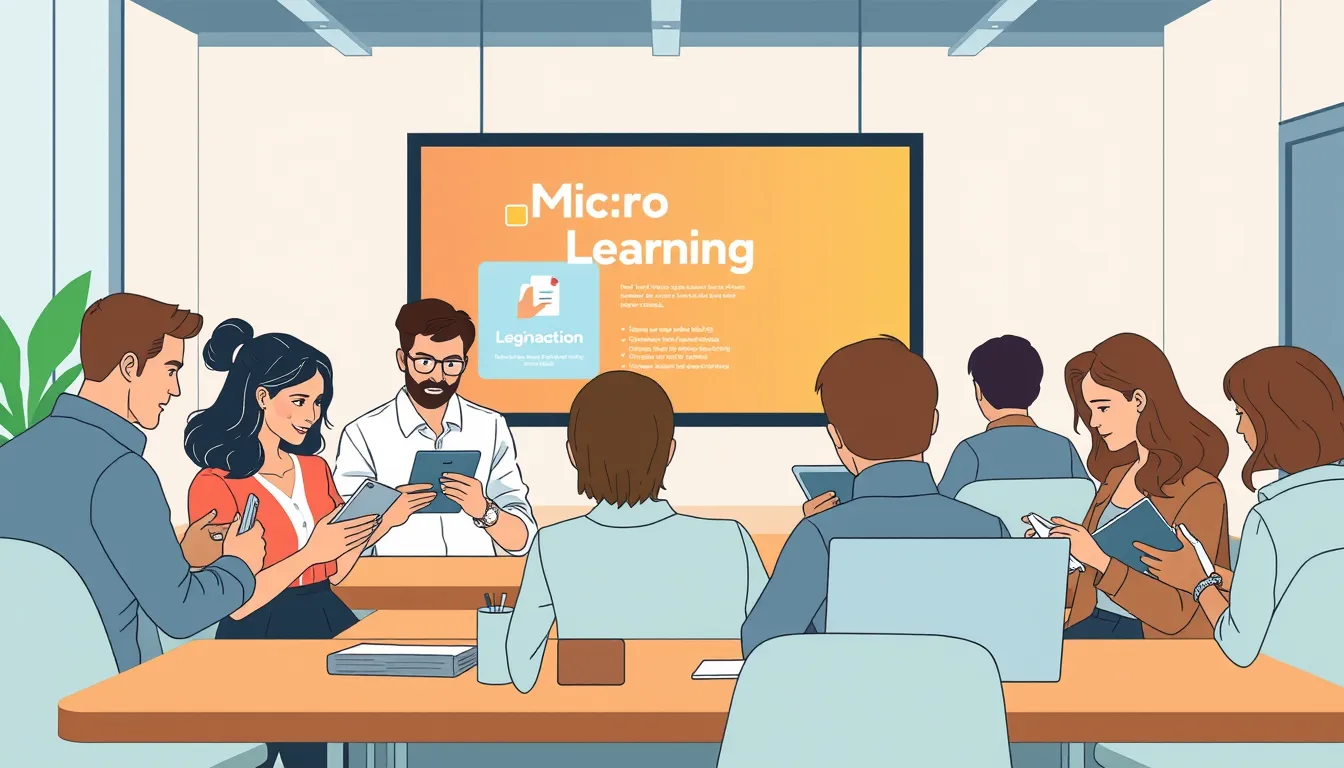
Microlearning is a corporate training method that breaks content into short, focused modules lasting 2 to 10 minutes. Each module targets a single topic or skill, enabling employees to learn quickly without stepping away from their work. This approach is especially effective in fast-paced environments where time is limited, as it integrates seamlessly into daily routines without requiring lengthy training sessions.
Microlearning has gained popularity due to its flexibility and adaptability. It works for employees at all levels—from new hires to seasoned professionals—and can be used for onboarding, upskilling, or compliance training. When combined with AI and LMS, microlearning becomes a powerful tool that automates content creation, personalizes learning paths, and tracks performance.
Who benefits most from microlearning? Companies where employees frequently need to master new skills or update their knowledge—such as retail chains, restaurants, hotels, call centers, IT firms, and manufacturing plants. It’s also highly effective for organizations with high turnover, where rapid onboarding is essential.
What Is Microlearning and Why It Works
Microlearning delivers training in bite-sized chunks, typically through short videos, interactive slides, quizzes, or text-based modules. Key characteristics of microlearning include:
- Duration: 2 to 10 minutes per module.
- Focus: One topic or skill at a time.
- Accessibility: Learn anytime, anywhere, on any device.
- Interactivity: Engaging elements like quizzes, games, and hands-on exercises.
Why is microlearning effective? Research shows that the human brain retains information better when it’s delivered in small doses. Short modules reduce cognitive overload, improve retention, and allow employees to apply what they’ve learned immediately. Plus, microlearning fits easily into busy schedules, eliminating the need for lengthy training interruptions.
Benefits of Microlearning for Corporate Training
Microlearning offers several advantages that make it a smart choice for businesses:
- Time efficiency: Employees spend just a few minutes a day learning, without stepping away from their core tasks.
- Higher engagement: Short, interactive modules hold attention better than long lectures or dense text.
- Flexibility: Training can be completed anytime, on any device—smartphone, tablet, or computer.
- Personalization: AI tailors content to each employee’s skill level and learning needs.
- Easy updates: Micro-courses can be quickly refreshed or scaled, which is crucial for companies with evolving processes or products.
- Measurable results: LMS platforms track progress, analyze training effectiveness, and help refine future content.
For example, a company with 200 employees reduced onboarding time by 40% and improved knowledge retention by 30% after implementing microlearning.
How to Implement Microlearning in Your Company: A Step-by-Step Guide
Rolling out microlearning requires careful planning. Follow this step-by-step guide to integrate it successfully into your corporate training:
Define goals and objectives: Clearly outline what skills or knowledge employees should gain. For example, improving customer service, mastering new products, or adhering to safety protocols.
Choose topics for micro-courses: Break down the material into small, focused modules. Each should cover one specific topic. For instance, training for sales associates might include:
- How to greet customers effectively.
- Active listening techniques.
- Handling objections.
- Closing a sale.
Create content with AI: Use a platform like Kelbado to automatically generate micro-courses from existing documents, presentations, or videos. AI adapts the material into the right format and adds interactive elements.
Select micro-course formats: Decide how the content will be delivered. Options include:
- Short videos (2–5 minutes).
- Interactive slides with quizzes.
- Quizzes and games.
- Text-based modules with visuals.
- Audio lessons.
Integrate with your LMS: Upload the micro-courses to your Learning Management System (LMS) so employees can access them anytime. Ensure the platform supports mobile devices and tracks progress.
Assign training to employees: Determine who needs to complete the micro-courses and set deadlines. For example, new hires might complete them during onboarding, while experienced staff use them for upskilling.
Gather feedback: After employees complete the courses, ask for their input to identify areas for improvement.
Analyze results: Use LMS analytics to assess training effectiveness. Track metrics like course completion rates, time spent learning, and knowledge retention.
Update content regularly: Keep micro-courses relevant by refreshing them with new topics and removing outdated material.
Microlearning with AI: How It Works
Artificial intelligence streamlines the creation and implementation of microlearning. Here’s how AI enhances corporate training:
Automated content generation: AI can turn existing documents, presentations, videos, or audio recordings into micro-courses in minutes. For example, uploading internal guidelines or webinar recordings to Kelbado generates ready-to-use micro-courses instantly.
Personalized learning: AI assesses each employee’s skill level and tailors content to their needs. If an employee already knows the basics, AI suggests more advanced modules.
Performance analytics: AI tracks employee progress, identifies knowledge gaps, and recommends improvements. For instance, if most employees struggle with a specific quiz, AI can suggest additional resources on that topic.
Automated translation: AI translates micro-courses into multiple languages, which is invaluable for global companies. Kelbado, for example, supports automatic translation into 25+ languages.
Interactive elements: AI adds quizzes, games, and practical exercises to micro-courses, boosting engagement. After watching a short video, employees might take a quiz or play a game to reinforce what they’ve learned.
Example: A company using Kelbado reduced micro-course creation time from days to just 15 minutes. AI automatically generated 50 micro-courses from internal documents, personalized them for different skill levels, and translated them into 5 languages.
Microlearning vs. Traditional Training: A Comparison
| Criteria | Microlearning | Traditional Training |
|---|---|---|
| Duration | 2–10 minutes per module | 1–8 hours per session |
| Flexibility | High: learn anytime, anywhere | Low: requires scheduled sessions |
| Engagement | High: interactive elements | Medium: depends on format |
| Knowledge retention | High: bite-sized content is easier to retain | Medium: risk of information overload |
| Implementation cost | Low: AI automates content creation | High: requires instructors, venues |
| Scalability | High: easy to update and scale | Low: difficult to update and adapt |
| Accessibility | High: works on any device | Limited: depends on format |
| Personalization | High: tailored to individual needs | Low: one-size-fits-all content |
Microlearning doesn’t replace traditional training entirely but complements it well. For example, use traditional sessions for in-depth learning and microlearning to reinforce knowledge or quickly onboard new skills.
Common Mistakes When Implementing Microlearning
Despite its advantages, companies often make mistakes that reduce microlearning’s effectiveness. Here are the most common pitfalls:
Lack of clear goals: Microlearning should address specific needs. Without defined objectives, employees may not see the value in completing the courses.
Overloading modules: Micro-courses should be short and focused. Cramming too much information into one module defeats the purpose.
Ignoring feedback: Employees are the best judges of training quality. Failing to gather their input can lead to disengagement and missed opportunities for improvement.
No measurement system: Without tracking results, it’s impossible to gauge effectiveness. Monitor progress and adjust training as needed.
Lack of interactivity: Micro-courses should be engaging, not just informative. Use quizzes, games, and practical exercises to keep employees interested.
Ignoring mobile compatibility: Many employees learn on smartphones or tablets. Ensure your LMS is mobile-friendly and optimized for all devices.
Infrequent updates: Microlearning content must stay current. Regularly refresh courses to align with company processes and industry trends.
Checklist: How to Create an Effective Micro-Course
Follow this checklist to design micro-courses that are both useful and engaging for employees:
- Define the course goal: What should employees know or be able to do after completing the module?
- Focus on one topic: Stick to a single skill or piece of knowledge.
- Structure the content: Break the material into logical sections (introduction, main content, conclusion).
- Use AI for content generation: Upload source materials to a platform like Kelbado to generate a ready-to-use micro-course in minutes.
- Add interactive elements: Include quizzes, games, or practical exercises to reinforce learning.
- Optimize for mobile: Ensure the course displays correctly on smartphones and tablets.
- Test for clarity: Ask a colleague to review the course and provide feedback.
- Upload to your LMS: Integrate the course into your Learning Management System for easy access.
- Assign training: Determine which employees need to complete the course and set deadlines.
- Gather feedback: After employees complete the course, ask for their input and make improvements.
FAQ
What is microlearning?
Microlearning is a training method that delivers content in short, focused modules, typically lasting 2 to 10 minutes. Each module targets a single skill or topic, making it easier for employees to absorb information quickly.
What are the benefits of microlearning for employees?
Microlearning boosts engagement, improves knowledge retention, saves time, and allows employees to learn at their own pace without disrupting their workflow.
How does AI help with microlearning?
AI automates the creation of micro-courses from existing materials, personalizes content to fit individual employee needs, and analyzes training effectiveness to optimize learning outcomes.
How long does it take to create a micro-course with AI?
Using AI tools like Kelbado, you can create a micro-course in just 10–15 minutes by leveraging existing documents or templates.
Can microlearning be used for onboarding?
Yes, microlearning is ideal for onboarding because it allows new hires to quickly grasp key information without feeling overwhelmed.
What are the most common mistakes when implementing microlearning?
Common mistakes include unclear goals, overloading modules with information, ignoring employee feedback, and lacking a system to measure training effectiveness.
Conclusion
- Microlearning is an effective corporate training method that breaks content into short, focused modules, increasing employee engagement and retention.
- AI simplifies the creation and implementation of microlearning by automating content generation, personalizing learning paths, and analyzing results.
- Implementing microlearning requires careful planning: set clear goals, choose topics, create content, and integrate it with your LMS.
- While microlearning doesn’t replace traditional training entirely, it’s a powerful complement—especially for quickly mastering new skills or reinforcing knowledge.
- Avoid common pitfalls like overloading modules, neglecting feedback, or ignoring mobile compatibility to maximize effectiveness.
If you’re ready to implement microlearning in your company, try Kelbado. It automates micro-course creation from existing materials, personalizes training for each employee, and tracks performance—saving you time and improving learning outcomes.